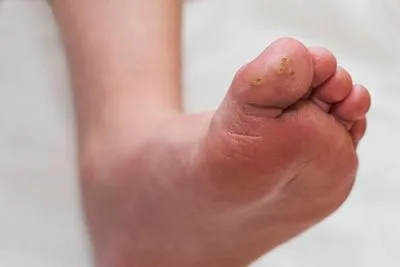
Plantar warts are common growths that occur on the soles of the feet and are caused by a viral infection. While generally benign, these warts can lead to pain and discomfort, affecting your ability to walk or engage in daily activities. At Podiatry Solutions of WNY, located in Williamsville and Lockport, NY, Dr. Jason White and our dedicated team specialize in the diagnosis and treatment of plantar warts.
What Are Plantar Warts?
Plantar warts are growths that form on the bottom of the feet, often in areas subjected to pressure, such as the heels or balls of the feet. These warts are caused by the human papillomavirus (HPV), which enters the skin through small cuts or abrasions. The virus thrives in warm, moist environments such as public pools, locker rooms, and gym floors. As a result, individuals who frequently visit these places are at a higher risk of developing plantar warts.
While plantar warts may start small and not cause much pain, they can grow over time and become more uncomfortable, especially with pressure from walking or standing. In some cases, multiple warts can appear together, forming what’s known as mosaic warts, which can be more difficult to treat.
Symptoms of Plantar Warts
eople with plantar warts may notice several symptoms, including hard, rough growths on the soles of the feet. These growths may feel tender when standing or walking, and small black dots may appear in the center of the wart, these are clotted blood vessels. As the wart progresses, it may cause a feeling of something being stuck in your shoe, even when barefoot. If you are experiencing any of these symptoms, it’s important to consult with a podiatrist for proper diagnosis and treatment.
How We Treat Plantar Warts at Podiatry Solutions of WNY
One option for treating plantar warts involves the use of topical treatments, which may include over-the-counter or prescription-strength medications. These treatments typically contain acids or other solutions that gradually dissolve the wart tissue.
In cases where other treatments have not been successful, surgical excision may be necessary. This minor procedure removes the wart entirely, providing long-term relief for the patient.